
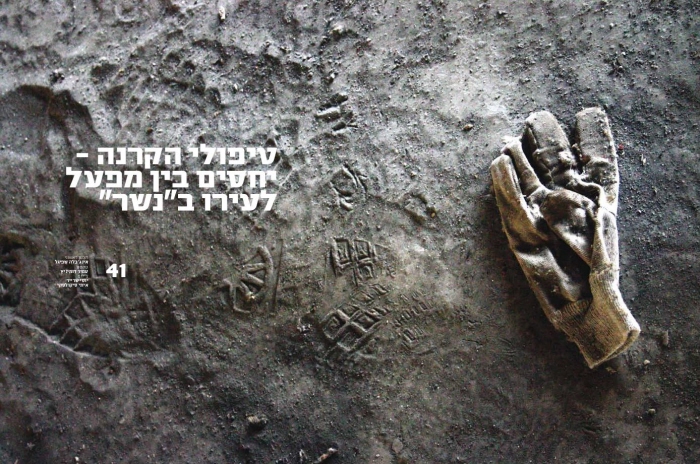
My first article for DOMUS was a direct outcome of my final project in University.
The article is in Hebrew, so here's a short summary:
The NESHER Cement Factory was opened in 1922 and had a huge part in the construction industry in Palestine, Israel and the Palestenian authority. The factory is also the sole reason for the founding of the city of Nesher, that was established by the factory's workers. Both the Factory and the city were designed according to Modernist theories of that time, The article shows how theories published by Le Corbusier, only short years before, took shape on the rivers of the Kishon stream in the British mandate era over Palestine.
View PDF
View PDF
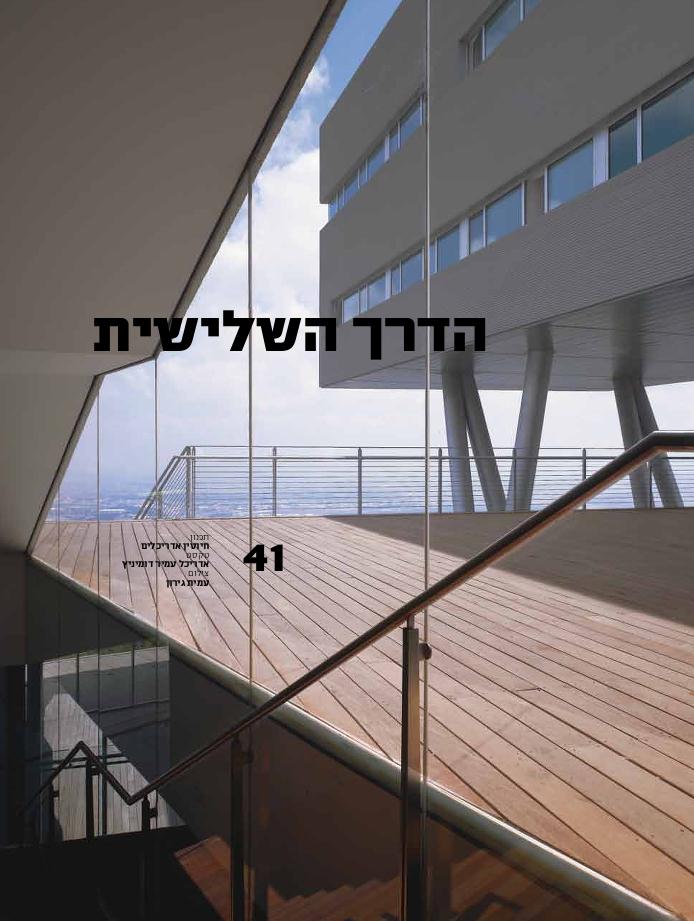
Student's House in the University of Haifa.
View PDF
View PDF
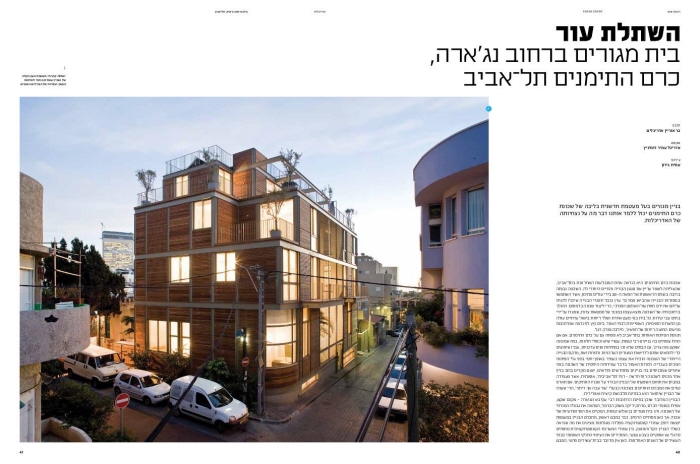
'SKIN GRAFT' - Housing building in Tel Aviv, Israel.
The Yemen's vineyard neighborhood is one of Tel Aviv's most colorful and authentic areas. Its narrow alleys and decorated facades stand out against the development boom that engulfed the rest of the city over the last decade. Despite of the homogeneity of the neighborhood's 'dress code', of thick concrete walls and inner courtyards, one new building manages to blend in with a strikingly different look. Retaining the proportions of the old residents, this new building uses a different set of skins composed of steel construction and wood louvers. The airy cover allows for a sneak peek into the building's interior, discovering its heart of traditional concrete blocks. The contrast between the fashionable newcomer and its surroundings creates a fascinating remark about the temporariness and the vulnerability of our existence.
View PDF
View PDF
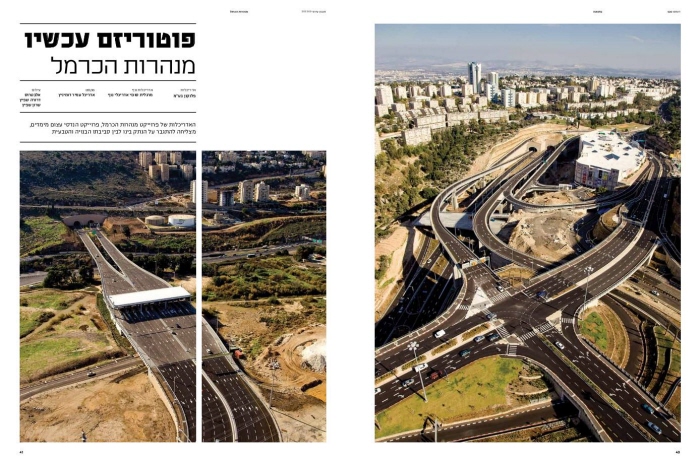
'FUTURISM NOW!' - The Carmel Tunnels, Haifa, Israel.
The Carmel tunnels, the new underground highway underneath mount Carmel in Haifa city, Israel, owe their existence to the ideas of the futuristic movement from a century ago. Conceived by planners from the British mandate era in mid 1930's, the tunnel was supposed to be part of a middle eastern road system throughout the British empire, connecting India to Africa. Tough it was completed only 80 years later, the architectural design of the tunnels still relies upon futuristic inspiration, to combine long and massive different spaces into one, flowing megastrucutre.
View PDF
View PDF
gLike
DOMUS - Articles
Between 2010 to 2012 I was honored to contribute to the Israeli version of DOMUS.
In my articles, I try to emphasize the cultural, the historical and environmental conotations of the buildings that were reviewd.
