
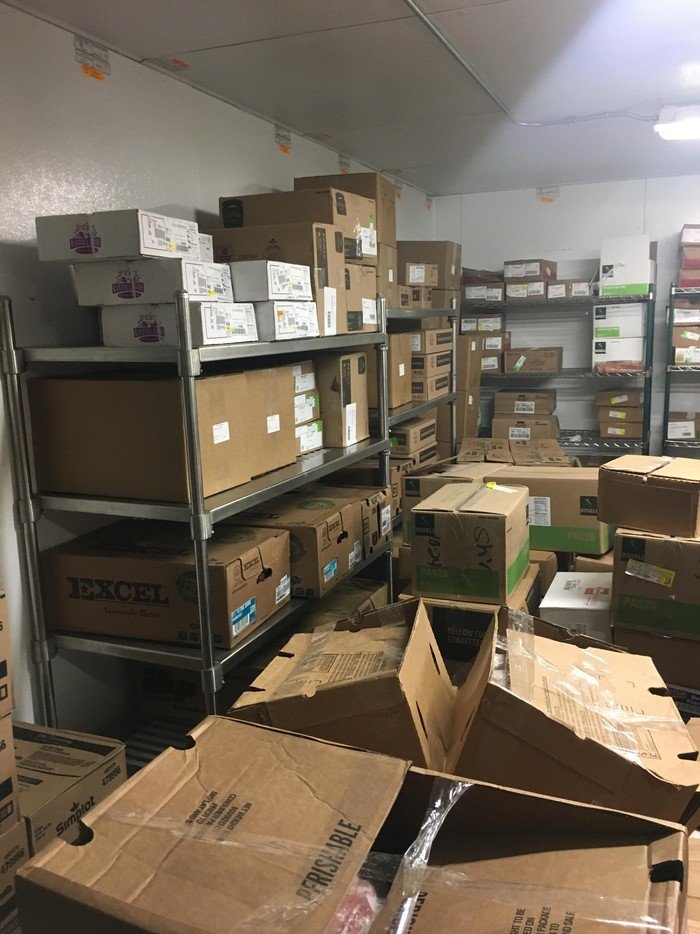
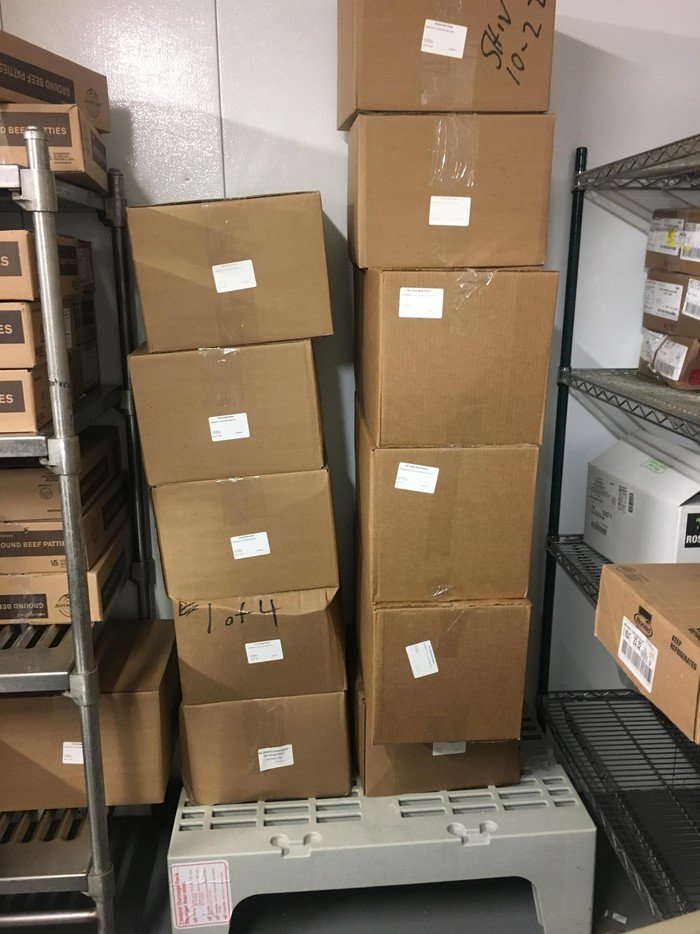
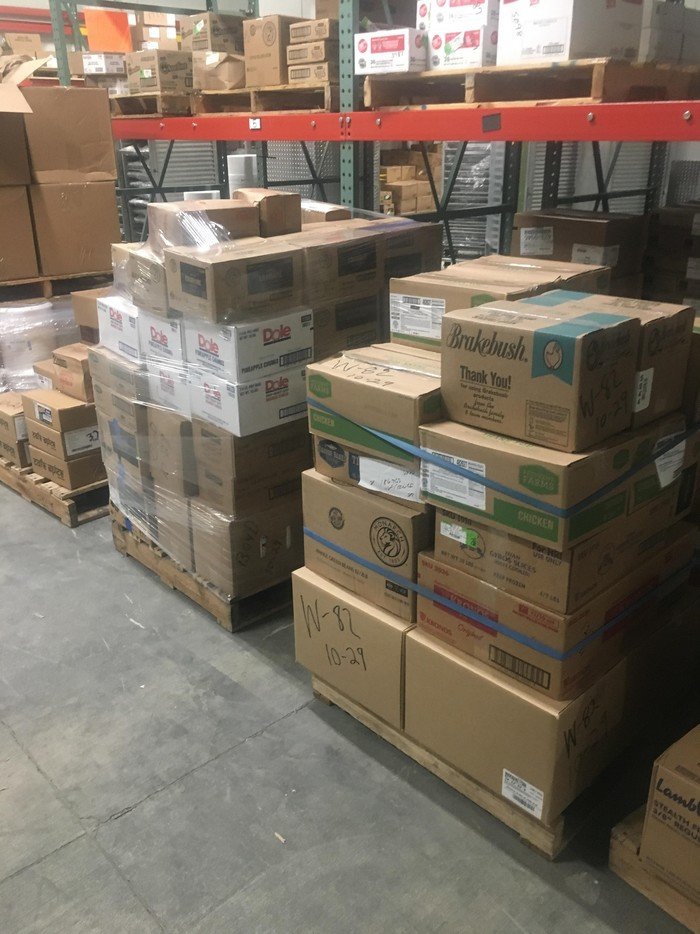
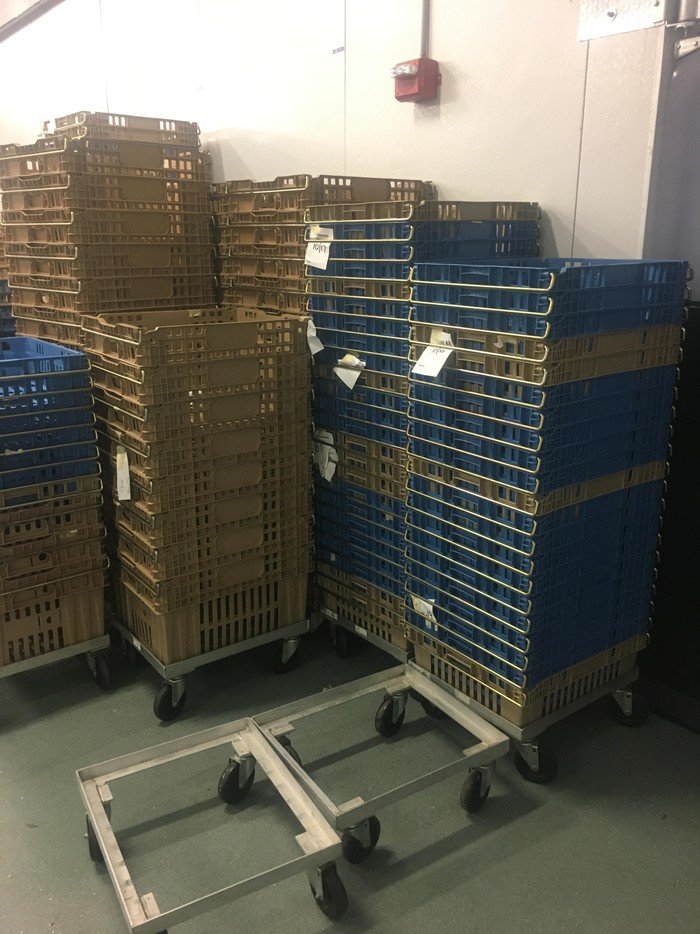
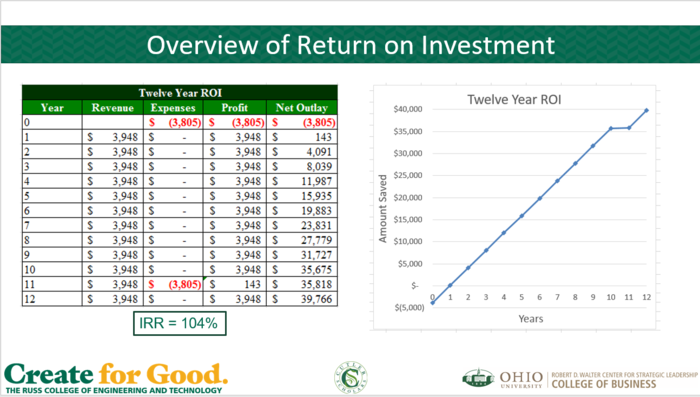
In the Fall of 2018, I participated in EcoChallenge led by the Robe Leadership Institute, Honors Tutorial College, and the College of Business Strategic Leadership program. In this challenge, I was assigned to a random 4 person, multidisciplinary team. We had two months to develop and pitch a solution which lowered OU's costs and carbon footprint. The team focused on reducing the non-reusable packaging (mainly cardboard) used by OU's Central Food Facilities. We conducted numerous meetings with our customer, obtained vendor quotes, and found online resources to validate our claims and estimations. Our proposed solution was to replace the cardboard boxes used to ship meat products with reusable plastic crates. The result was an estimated 104% return on investment and a reduction of 22 metric tons of CO2 equivalent per year. We received 2nd place for our pitch and our idea will be implemented by the university.
