

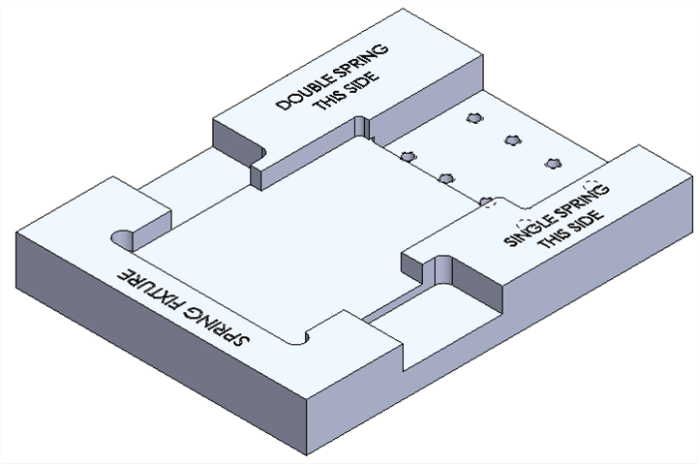
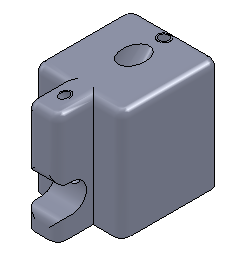
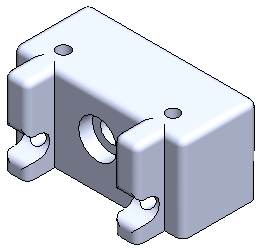
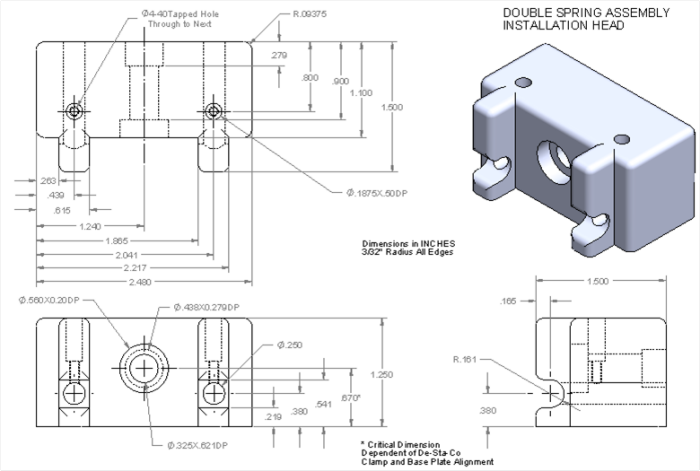
Over summer break 2013 I had the opportunity to work as a Manufacturing Engineering Intern for The Datacard Group in Minnetonka, MN. One of the responsibilities of a manufacturing engineer at Datacard is to design and fabricate fixtures to help improve the assembly process for our assemblers. I was asked to help improve the assembly of a specific module component by creating a new fixture. This involved evaluating available resources, learning about the assembly in question, creating 3D CAD models in the SolidWorks CAD package, and machining and testing new fixtures. This project taught me a lot about how to design for manufacturability, utilize available resources, and a lot about general machining practices. This project helped me develop my strengths which include CAD modeling, project planning, and research and development. It tested my patience, however, as I experienced some roadblocks along the way, mostly pertaining to documentation support and seeking higher level approval.
