
The Christian Science Monitor
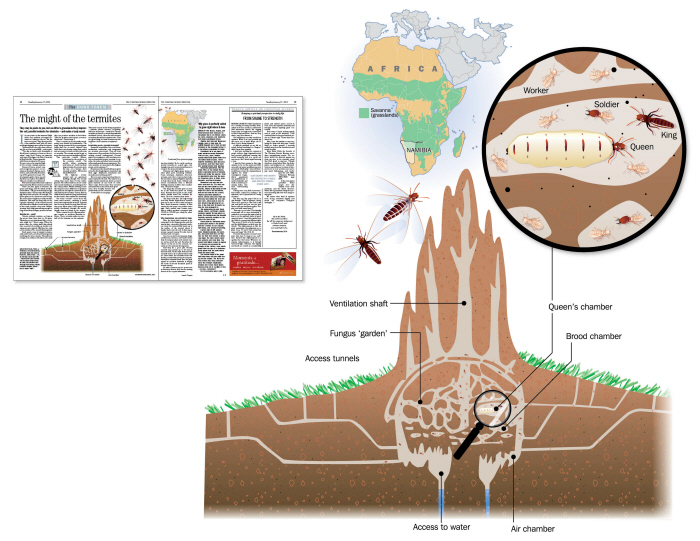
“The Might of the Termites”
These illustrations were created to capture the amazing lives of termites for the “Home Forum” section of the Christian Science Monitor. The main image is a cross section of a termite mound, displaying both their ingenious architecture and their fascinating social structure. Additional art includes a map of their range in Africa as well as a young king and queen flying away to start a new colony. Created using Adobe Illustrator.
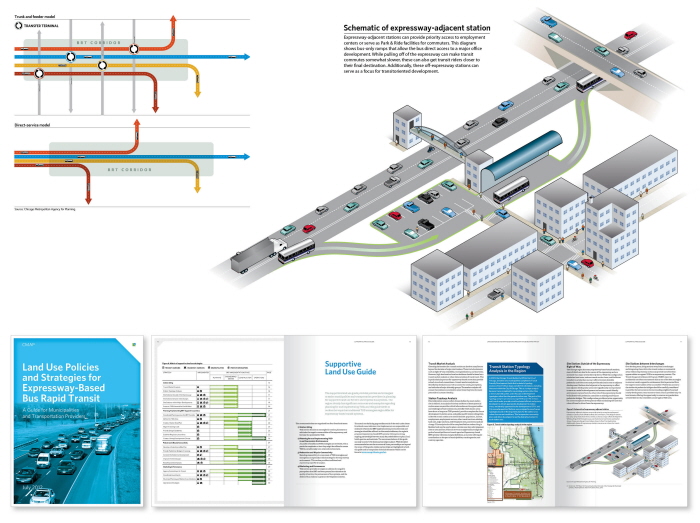
CMAP BRT Report
The topic of BRT – Bus Rapid Transit – is told in this report with the help of a diagrammatic technical illustration, while a matrix chart of supportive strategies shows the steps partners would take to make it a reality. Photography, maps, and sidebars utilized a two-column grid to support the content.
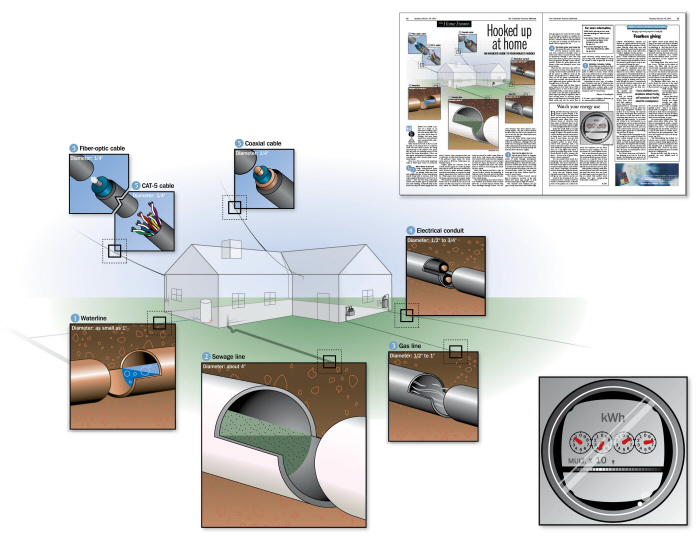
The Christian Science Monitor
“Hooked Up At Home”
With the notion of exploring the various utilities connected to a typical home, this piece’s approach uses a realistic, diagrammatic illustration style. Focus is placed on the scale, function and component makeup of each connection, in addition to their location in relation to the house.
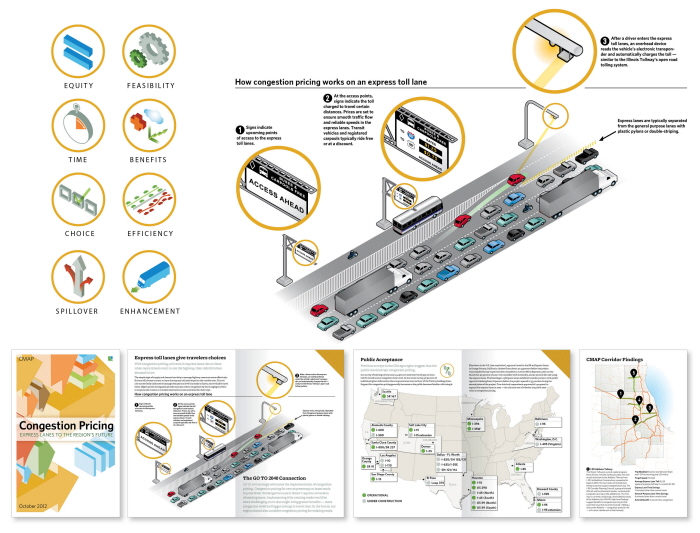
CMAP Congestion Pricing
The topic of congestion pricing is explained with the aid of a technical illustration at the heart of this booklet. Additional icons illustrate the benefits and challenges, while maps show acceptance of similar, existing programs and research findings.
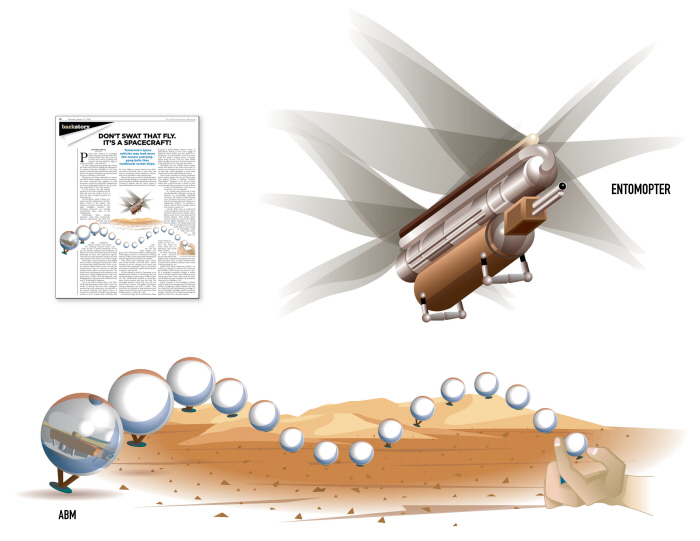
The Christian Science Monitor
“Don’t Swat That Fly. It’s a Spacecraft!”
Technical illustrations reveal conceptual spacecraft for future Martian missions, with the spotlight on scale and technical function, distinguishing them from traditional approaches to extra-terrestrial exploration.
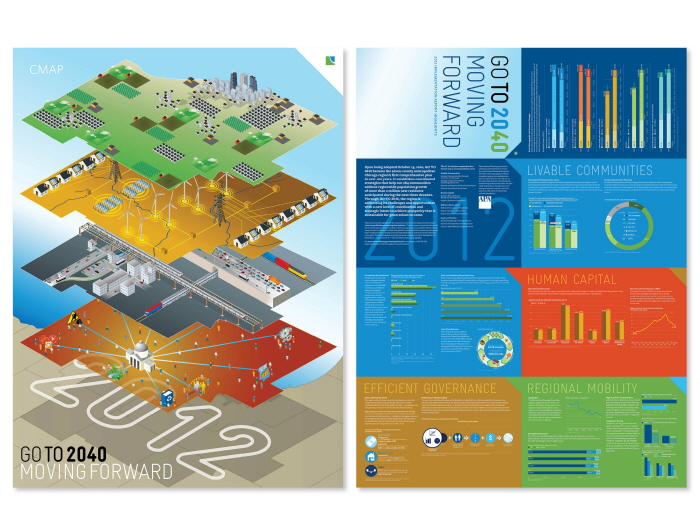
CMAP 2012-2013 Implementation Report
The 2012-2013 Implementation Report is a double-sided poster, with the interior highlighting the agency’s accomplishments over the past year. Informational graphics explain the data, while a 3-D technical illustration on the outside conceptualize and capture the agency’s major themes.
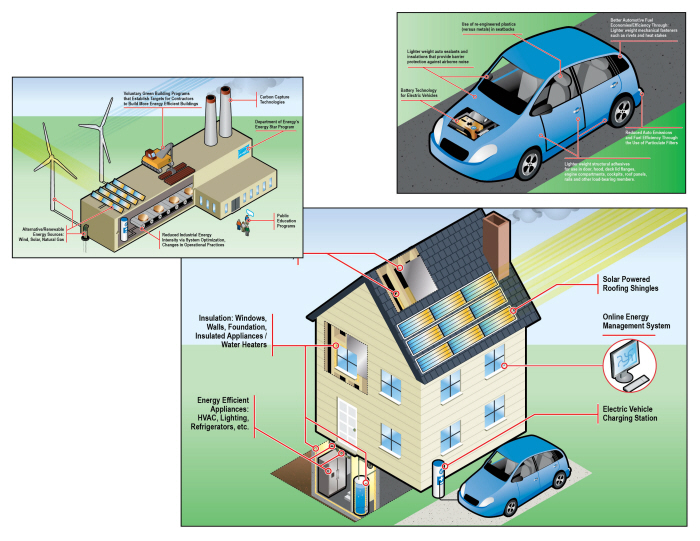
Green Technology
This series of illustrations shows advances in green technology applied to a home, a car and industrial factory. 3-D perspective engages the reader, giving depth and dimension, while cut-aways are used to show the technologies’ application and function.
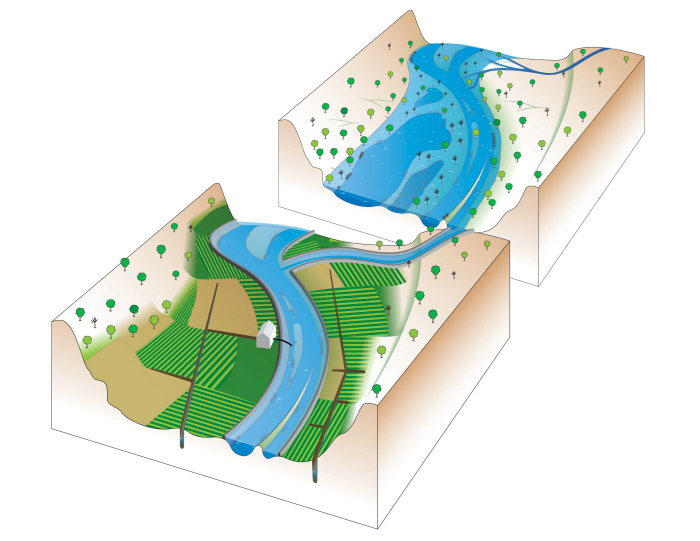
The Nature Conservancy
Cross-sections representing a riverbed showing flow in the spring months during seasonal rains and melt from winter (winter can be seen below the top-most water level.) In the foreground is a representation of the same riverbed after utilization for farming.
Worldbook
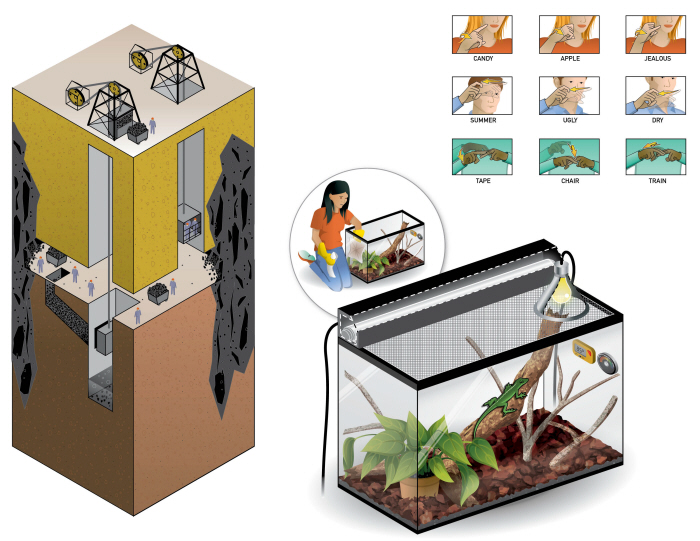
A collection of technical illustrations visualize a variety of articles for WorldBook. At left, a mine shaft is rendered at a 3/4 cut-away perspective to give a sense of scale as well as an “x-ray” of the inner workings of a coal mine operation. The same perspective is used to the right for an anole terrarium to show a typical set-up; instances of cut-away are used to better explain the types of lighting. A series of two-dimensional illustrations at top right show signing, using transparency to emphasize the movement, placement and variation of sign language.
The Chicago Tribune
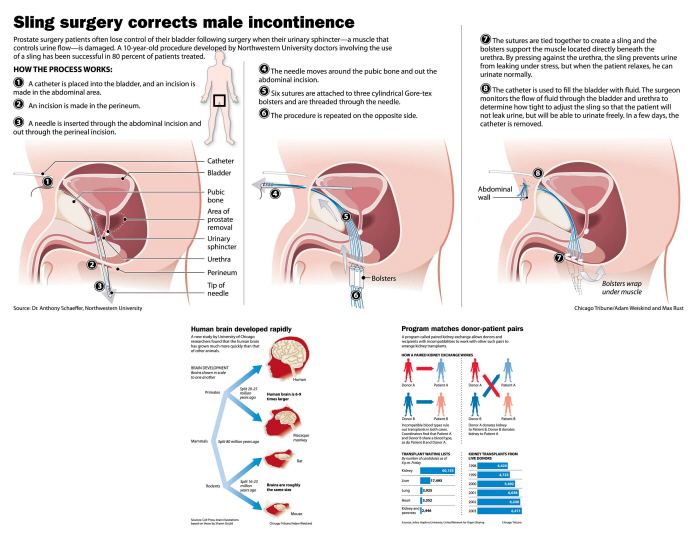
These pieces for the Chicago Tribune’s health section focus on advances in modern medicine. The piece above illustrates a new procedure to correct incontinence following prostate surgery. A cross section is used to show the location of the internal organs in relation to the internal and external views of the surgery.
At lower left, evolution of the human brain is explored in comparison to other mammals, branching out from a common ancestor.
At lower right, the system for matching organ donors based on blood types is represented along with statistics on waiting times and increases in the number of transplants in recent years.
The Christian Science Monitor
“Frog Man” | “The ABCs of Bees”
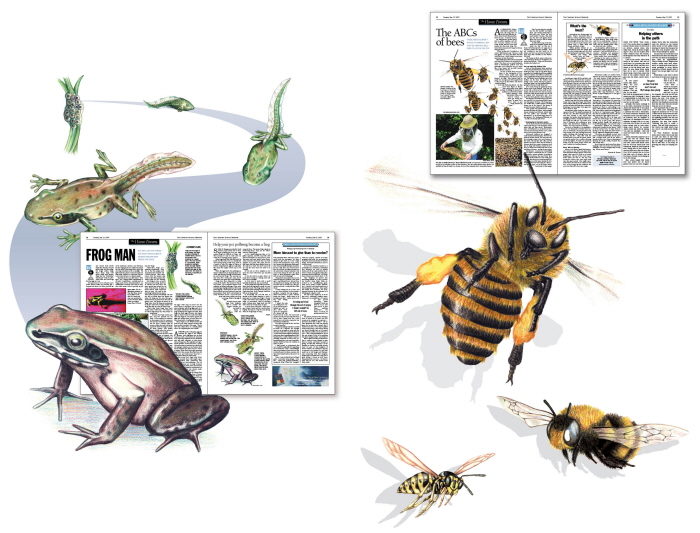
The typical growth cycle of a frog is illustrated at left, visualizing a story about an exotic frog breeder. The illustrations at right highlight an article on bee farming, as well as a sidebar piece on different types of bees. Both stories called for naturalistic and detailed full-color illustrations in order to best represent each animal without depending entirely on photography. The drawings were created using colored pencil and pen and ink.

PTC
Photo-illustrations for an ad campaign created at Phillip Johnson Associates use an action-movie theme to promote the latest services of PTC, a tech company specializing in product development and product lifecycle management.
gLike
Technical Illustration
Technical illustrations are used to show description, motion, workings and detail in ways photography and words cannot. Isometric/3-dimensional renderings are created primarily using Adobe Illustrator.